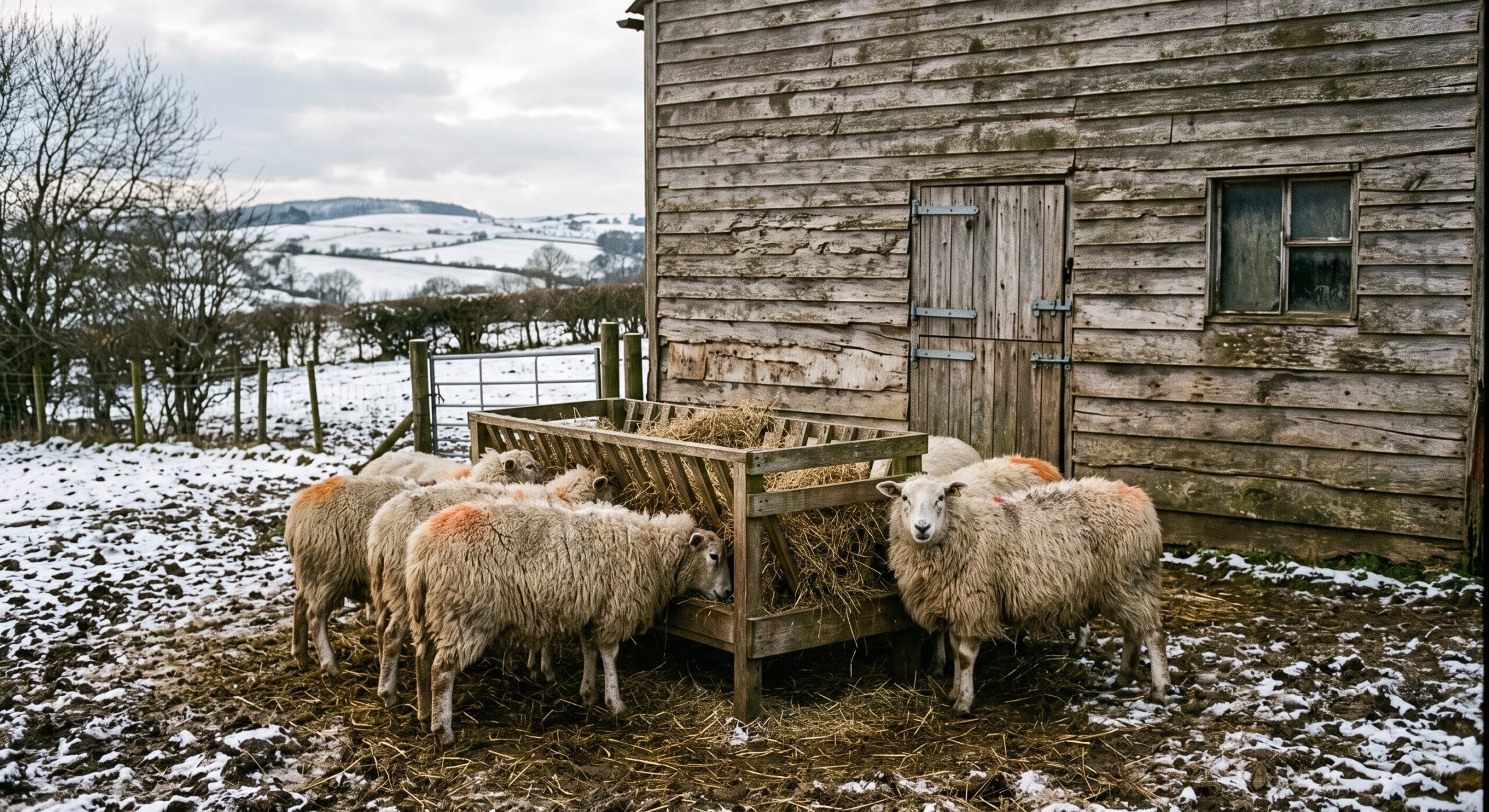
Two families in the same county bought their first ewes the same spring, eight head apiece, out of the same dispersal sale.
They bought feed at the same store. They ran about the same ground. They asked the man at the counter roughly the same question, which is the question anybody asks who has just brought home an animal they’ve never kept before, and it amounts to this: what do I feed them.
One flock is still going. The other lost four ewes in a single week eighteen months in, and the man who lost them had done nothing that morning he hadn’t done every morning before it.
Which is the trouble with the question of what to feed sheep. The mistake doesn’t announce itself.
What Both of Them Got Right
Neither family overthought the grass, and both were correct not to.
A sheep is a ruminant and the great bulk of what she eats ought to be forage. Pasture in the season, hay out of it, clean water, and free-choice salt and mineral. Grain has a place, but the place is narrow: a ewe carrying twins in her last weeks, a ewe milking, a lamb being finished. A dry ewe in the middle of summer needs grass and not much else, and the flock that gets a scoop of grain every evening because it’s pleasant to watch them come running is a flock being made fat and expensive for no return.
Both places had that part sorted. Both put up decent hay. Both kept water in front of the flock.
The divergence was on a shelf about four feet off the floor, in a bag that looked like every other bag.
The Mineral That Does It
Sheep need copper. Not much, and the window between what they need and what kills them is narrower than for any other animal on an American farm.
Here’s the mechanism, and it’s worth understanding rather than just being warned about. A sheep’s liver takes copper up readily and lets go of it very slowly. There’s almost no back door. So a ration carrying a little more copper than she can use doesn’t make her sick. It banks. Month after month it banks, in an animal that looks entirely well, eating well, raising lambs, giving every outward sign that the feeding program is working.
Then something stresses her. Shearing day. A hard change in the weather. A trailer ride. The liver cells let go all at once and the stored copper floods into her blood, and an animal that was sound at breakfast is jaundiced by evening. She goes off, she grinds her teeth, she drinks like she can’t stop. Her urine goes dark. Most of them are dead a day or two after the first sign shows.
Four at once is not four coincidences. It’s four animals that had been loading the same shelf for a year and a half and got shaken on the same morning.
Why the Bag Was the Problem
Cattle need roughly twice the copper a sheep does and tolerate something on the order of ten times what will kill her. Goats sit higher than sheep too. So a mineral or a feed formulated for cattle, for goats, or for a mixed barnyard is not a slightly imperfect fit for sheep. It’s a different product with a different safety margin, and feeding it to sheep is the single most common way this happens.
The man who lost the four had been buying an all-stock feed because he had a few goats as well and one bag was simpler than two. That’s not carelessness. That’s exactly the reasoning any sensible person would apply to any other species.
Read the tag. Copper needs to be low, and anything labeled for sheep will be. A general rule in the literature puts feeds above about 25 parts per million of copper in the potentially toxic range for sheep, which is under the level plenty of cattle products carry. Molybdenum matters too, since it works against copper absorption, which is why sheep minerals are formulated the way they are and why substituting is a poor idea in both directions.
Breed plays in as well. Some are notably more susceptible than others, and a flock that came through fine on a marginal ration is not proof the ration was fine.
The Rest of What to Feed Sheep
With that settled, the rest is less dramatic and still costs people money.
Changes go in slowly. Grain introduced too fast, or increased too fast, brings on overeating disease, and that one kills lambs quickly. A week to make a change that could be made in a day is a week well spent.
Hay quality is worth more than most folks credit. A ewe eats a fixed amount by volume before she’s full, so poor hay means she runs short on what she needs while looking perfectly satisfied. The feeding program that fails in February usually failed the previous June, when the hay was cut late.
And feed the animal in front of you, not the number in a book. A ewe’s needs move a great deal across the year, and the flock that gets the same ration all twelve months is overfed most of it and underfed exactly when it matters.
How Many She’ll Carry
The other question the counter gets asked is how many head the ground will hold, and the honest answer is that nobody can tell you from a distance.
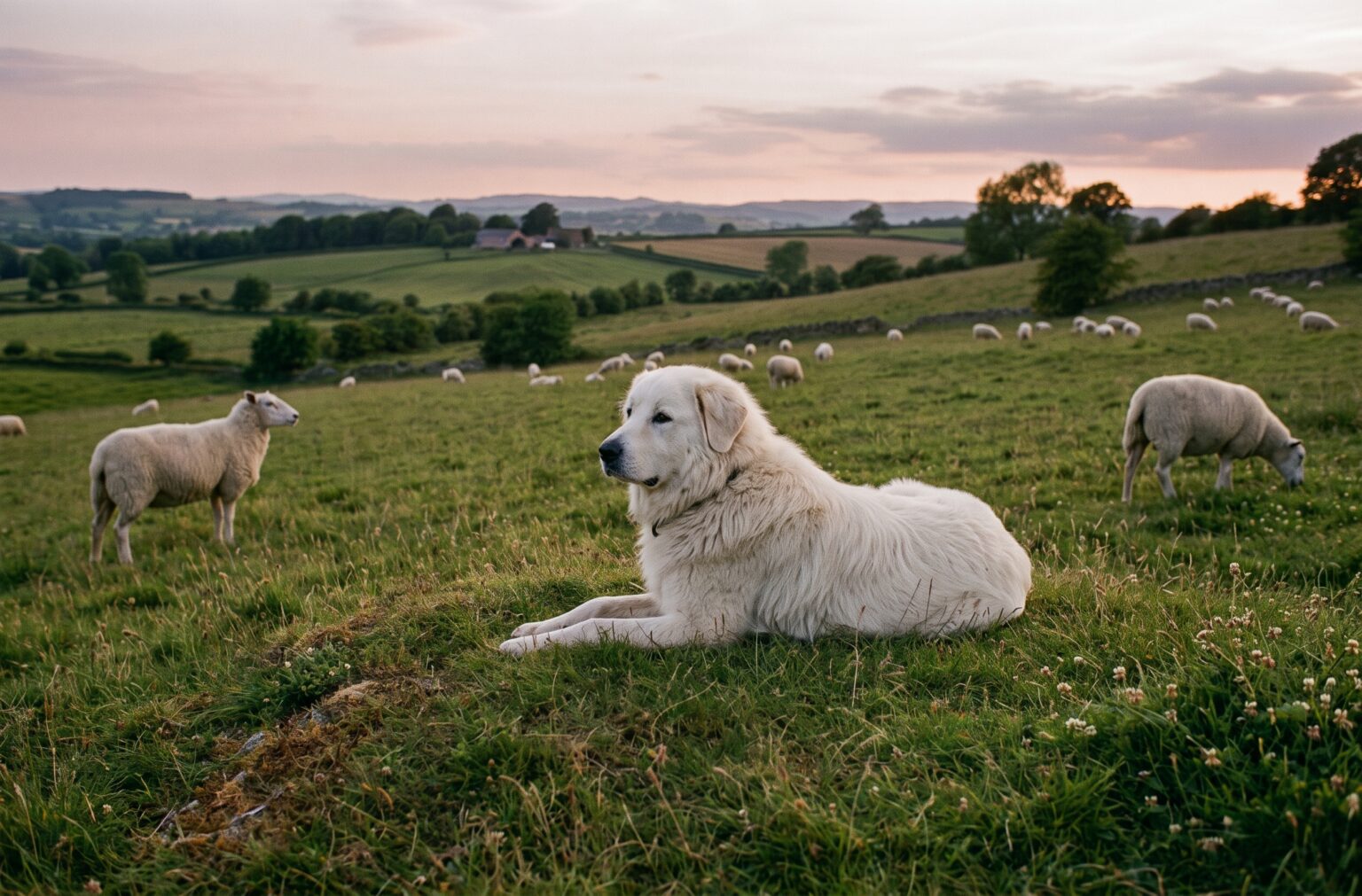
The range in the extension literature is wide for a reason. Good improved pasture in decent rainfall might carry four to six ewes an acre through the growing season. Average native pasture runs half that. Dry country runs the other way entirely, acres per animal rather than animals per acre. The old rule of thumb is that five ewes eat about what one cow does.
The number that actually governs is the lean season, not the good one. Ground that carries the flock beautifully in May carries nothing in January, and most small flocks are on hay four to six months a year. During those months the acreage doesn’t matter, because the feed is coming from somewhere else and getting paid for.
Which is the honest arithmetic of a small flock. The grass is free and there isn’t enough of it, and the gap is a line item.
Both those families still have sheep. The one that lost four went back to the store, bought two bags instead of one, and hasn’t had a problem since. He’ll tell you now that it cost him more to save eleven dollars than anything else he’s done out there.
A few questions folks ask
What should you feed sheep?
Forage first. Pasture in season, good hay out of it, clean water, and a mineral formulated for sheep. Grain is a supplement for ewes in late gestation or lactation and for finishing lambs, not a daily ration for the whole flock.
Why is copper dangerous for sheep?
A sheep’s liver takes copper up and releases it very slowly, so excess accumulates for months without symptoms. A stress event releases it into the blood all at once, and death often follows within a day or two of the first sign.
Can sheep and goats eat the same feed?
Not safely as a rule. Goats tolerate considerably more copper than sheep, and feed or mineral formulated for goats, cattle, or a mixed barnyard can slowly poison sheep. Buy the bag labeled for sheep.
How many sheep can you keep per acre?
It varies enormously with rainfall, soil, forage type, and grazing management, from several ewes per acre on good improved pasture to several acres per ewe in dry country. Plan around the leanest season rather than the best one.
A note on this series
Harmony Hills Ventures publishes these posts as general information for rural landowners. They are not veterinary, agronomic, engineering, or legal advice, and no post can account for the conditions on a particular place. Land, livestock, water, and weather differ from one county to the next and from one year to the next. Before you act on anything you read here, talk it over with your veterinarian, your county extension office, or another qualified professional who can look at your own ground.