The heat came the second week of July and it didn’t leave.
Not the kind that breaks by suppertime. The kind that settles over a county and stays, until the ground quits holding any cool at all and the nights stop offering much relief. By the fourth day the flock had gone quiet in a way that had nothing to do with contentment. And here’s the thing most folks have backwards: the work to help chickens recover from heat stress doesn’t start when the weather turns. It starts the morning after, and it runs about six weeks.
Here’s how that stretch goes.
What the Heat Costs Her
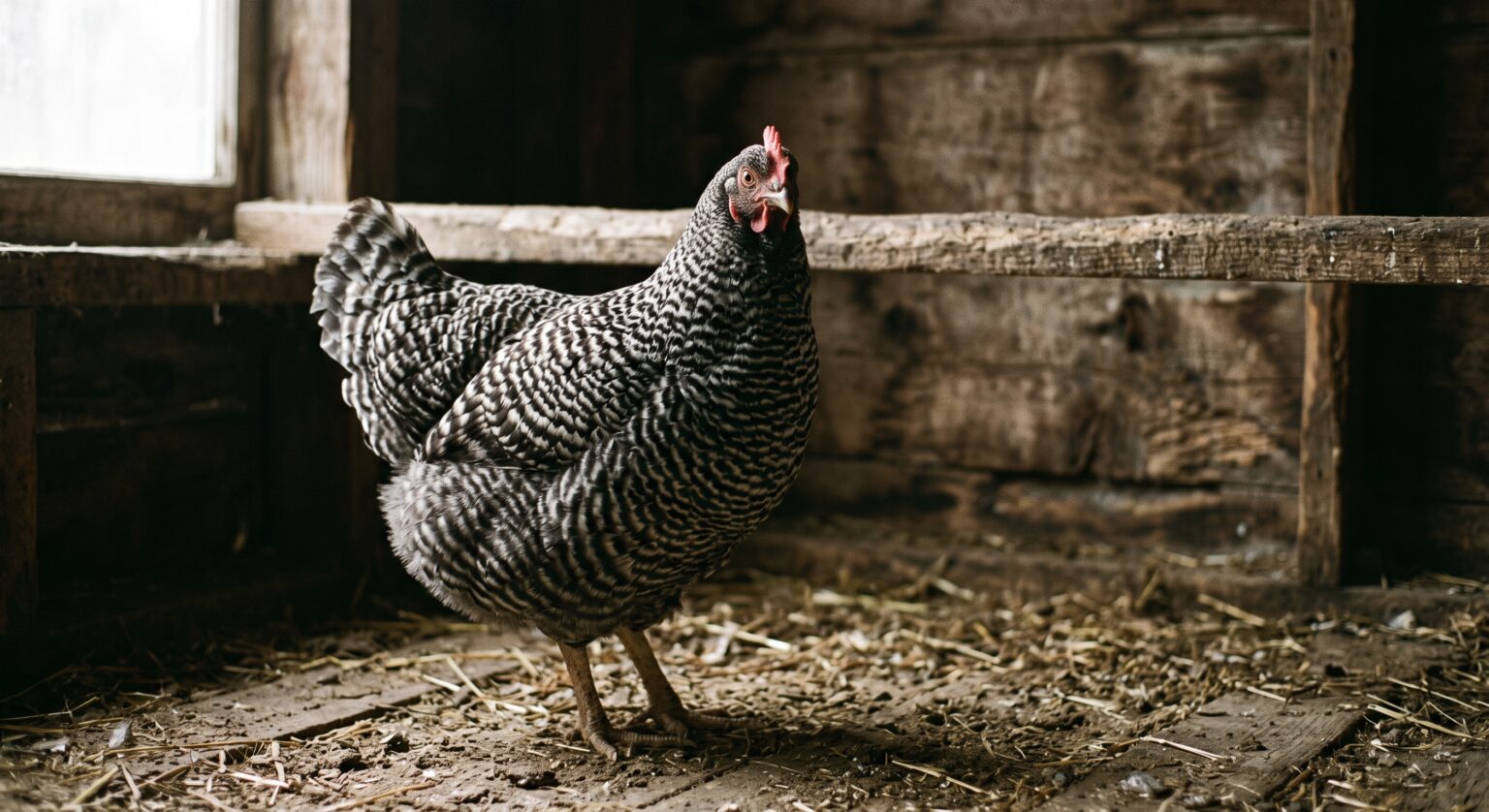
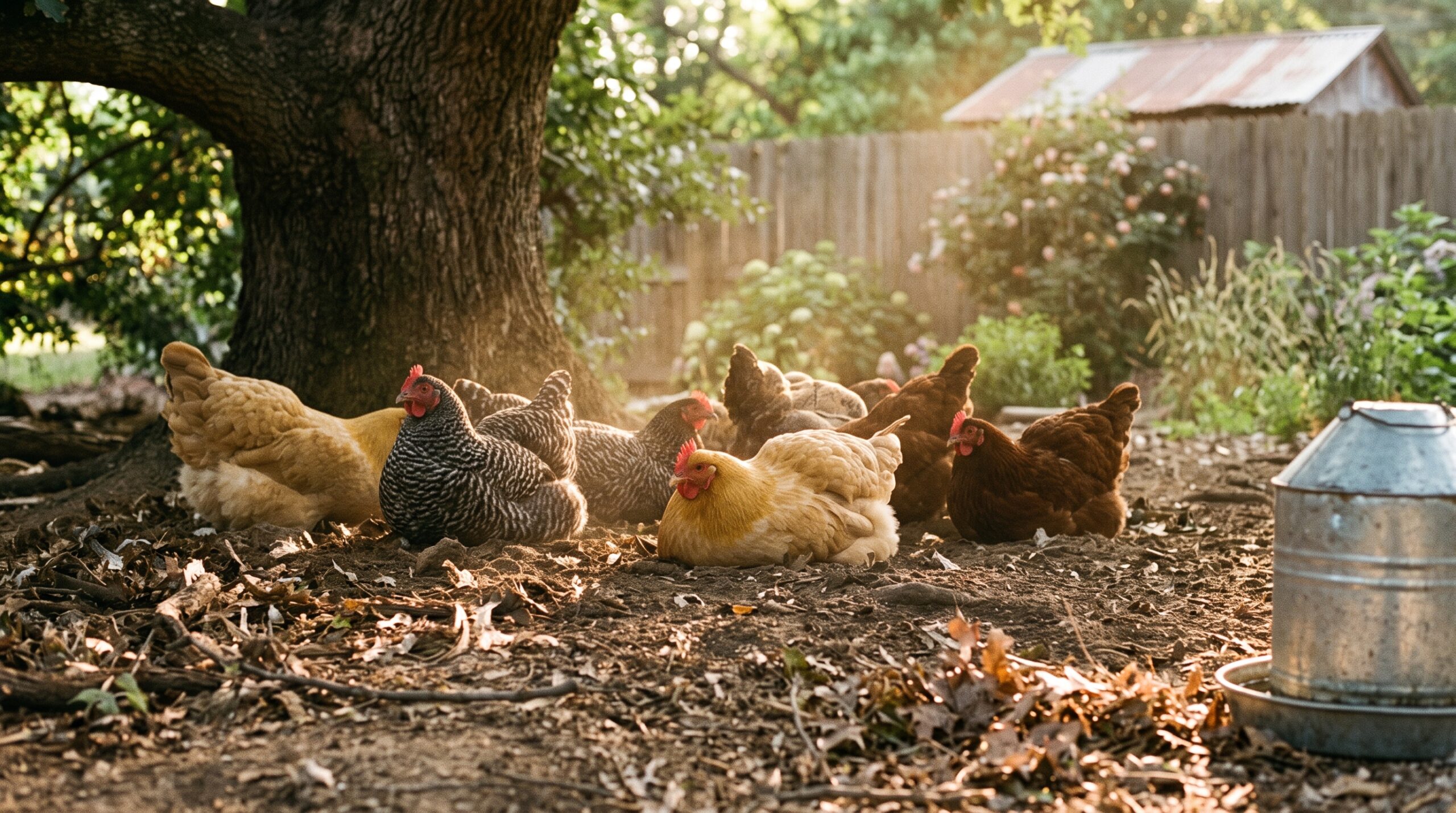
A hen carries about 105 degrees of her own, and not one sweat gland to help her put it down. She’s easy between 60 and 75. Past 85 she starts economizing on her own account. She quits scratching around. She goes off her feed. She stands with her wings held out from her sides to get a little air on the bare skin underneath, which is the closest thing to undressing that’s available to her.
Past 90 she pants, and that’s the last card in her hand.
Panting is work, though, and work makes heat. So by the third afternoon she’s burning heat to shed heat and losing the trade a little more each day. She’ll drink twice her usual water and still fall behind, because she’s breathing it right back out. Somewhere in there her blood chemistry goes off true, and the calcium she draws on to build a shell goes off with it, though nothing about that shows up yet. The bill for it comes later.
The Morning It Breaks
A front comes through in the night. By first light the air’s got some cool in it, and the flock is up and moving and the panting has stopped, and the whole business looks finished.
It isn’t. She’s stopped losing ground, is all. She hasn’t gained any back.
A hen’s thermostat doesn’t reset the minute the thermometer does. For roughly two days after she looks entirely recovered she’s still running short, and those are the two days nobody bothers with, because by then the weather’s pleasant and the crisis has the look of something in the past. Deep shade, cool water, electrolytes. Forty-eight hours past the point it seems necessary. That stretch is worth more than everything else in this piece put together, and it’s the one folks skip.
What It Takes to Help Chickens Recover From Heat Stress
Two things go wrong in the weeks after, and both of them start out as kindness.
The first arrives in a feed scoop. A hen coming off a hot spell has no appetite worth mentioning, and it’s a decent impulse to carry out some scratch grain to tempt her back. But scratch is candy. Every crop she fills with corn is a crop she didn’t fill with lay ration, and the ration is where her calcium and her vitamins live. She’s already eating two-thirds of normal. That two-thirds had better be the good stuff. Melon frozen into a block of ice does the same tempting without the cost, since it’s mostly water going in.
The second arrives on the end of a garden hose. We’ve watched more than one well-meaning man walk into a coop in August and wet down every bird in it, and it’s an honest mistake, because it’s exactly what a man would want done for himself. It doesn’t work that way on a chicken. Water sitting in feathers holds heat against the body instead of carrying it off, and inside a closed coop it runs the humidity up and makes panting less useful for every bird under the roof. Full immersion has its place, but its place is one bird in genuine trouble: cool water, never icy, body in to the neck, head kept dry, and then dried off with moving air before she goes back out. Left wet, she’s worse off than when she started.
The August Basket
The eggs tell the rest of it, and they take their time.
If the flock went off feed for a day, nothing much shows. If they were off a week, the yolks that were forming during that week got built short, and those eggs turn up looking it. Shell strength and egg weight are slower still. It can be the better part of two months before both come back to where they were in June.
So the basket coming out of the coop in late August is full of thin shells, wrinkled shells, shells with a sandy grit to them, and a person starts hunting for a new problem. There usually isn’t one. That’s July, arriving late.
September
By the middle of September the shells come back. Not all at once, and not evenly, but they come back, and the basket starts looking like it did in the spring.
The hens that came nearest to going down in July are worth remembering, though. A bird that lives through real heat stroke carries the weakness with her the rest of the season, and she’s the one to watch the next time the weather sets in. Come next July, she’ll want the shade before anybody else does.
Six weeks, start to finish, and most of it happens after the hard part looks over.
A few questions folks ask
How long does it take a hen to recover from heat stress?
She’ll look normal within a day or two of the heat breaking, but she isn’t back yet. Full recovery of egg production and shell quality runs closer to six to eight weeks.
Why are my eggshells thin after a heat wave?
Heavy panting throws off her blood chemistry, which throws off the calcium she needs for shells. Shell strength recovers, but it lags weeks behind the weather.
Should I give my chickens electrolytes after a heat wave?
For about two days past the point they look recovered, yes. Every day all summer isn’t necessary.
Is it safe to spray chickens with water to cool them?
Not as routine practice. Wet feathers hold heat against the body and raise coop humidity. Full immersion is an emergency measure for a single bird in distress.
A note on this series
Harmony Hills Ventures publishes these posts as general information for rural landowners. They are not veterinary, agronomic, engineering, or legal advice, and no post can account for the conditions on a particular place. Land, livestock, water, and weather differ from one county to the next and from one year to the next. Before you act on anything you read here, talk it over with your veterinarian, your county extension office, or another qualified professional who can look at your own ground.